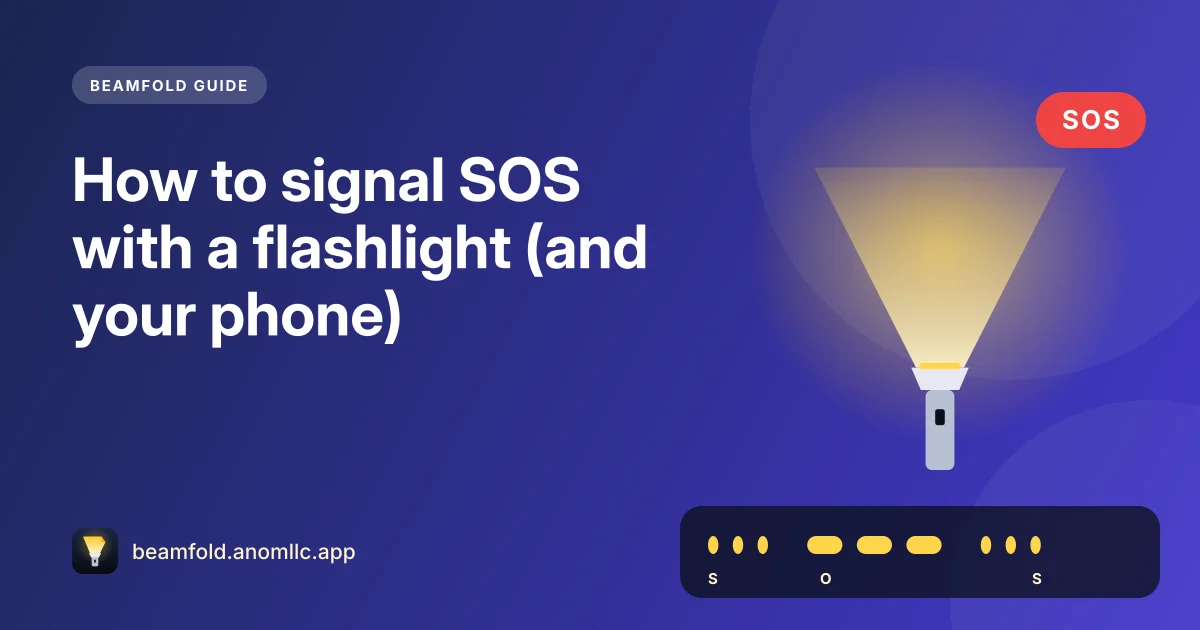
To signal SOS with a flashlight, flash three short, three long, three short (· · · — — — · · ·), pause, and repeat. It's the Morse code for SOS, the distress signal understood around the world. Keep each long flash about three times as long as a short one, and keep repeating until someone answers. If you can call your local emergency number, do that first; a light signal is for when you can't, or to help people find you.
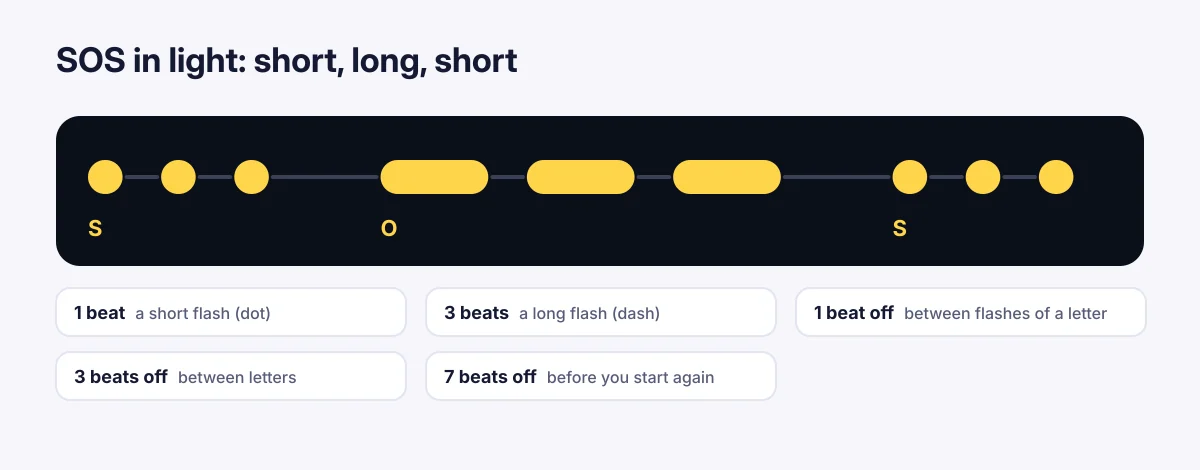
The exact timing
Morse code is built on one beat (a "unit"). With a light, a beat of about a fifth of a second is easy to read by eye.
| Part | Light | Length |
|---|---|---|
| Short flash (dot) | On | 1 beat |
| Long flash (dash) | On | 3 beats |
| Gap inside a letter | Off | 1 beat |
| Gap between letters | Off | 3 beats |
| Pause before repeating | Off | 7 beats |
So SOS is: on-off-on-off-on, a short pause, three long flashes, a short pause, three short flashes, then a longer pause before the next SOS. Radio operators often send SOS as one continuous run without the gaps between letters; with a light, the short gaps make it easier to read, and both are understood.
Send SOS with your phone (Beamfold)
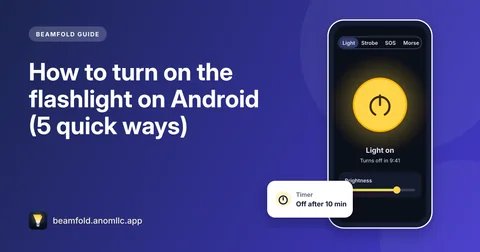
Counting beats by hand is hard when you're stressed. A flashlight app keeps the timing for you:
- Open Beamfold and tap SOS at the top.
- Tap the big switch. The flash sends S-O-S again and again until you tap it again.
- Keep the screen on and the app open. Phones pause apps in the background to save battery, so Beamfold keeps the screen awake while SOS runs and stops it if you leave the app.
- Point the light at where help could come from: a road, a boat, a window, a helicopter.
To send something other than SOS, choose Morse, type a short message (for example your name or "HELP"), and Beamfold shows each letter as it flashes.
Other distress signals worth knowing
- Three of anything. Three flashes, three whistle blasts or three fires in a row are a common sign of distress.
- The alpine distress signal. In the mountains of Europe, six flashes (or whistle blasts) in one minute, then a minute's pause, means you need help. The answer is three signals a minute.
- A steady light at night. A light that moves slowly from side to side is easy to spot from the air.
Tips that make your signal work
- Save battery. If help may take a while, send SOS for a minute or two at a time, then rest, rather than draining the phone in an hour.
- Get high and in the open. Your light is seen from much further away from a ridge, a clearing or a rooftop.
- Don't shine it in people's eyes, especially a pilot's or a driver's. Point it near them, not at them.
- Practise once at home, so you know where SOS is when you need it.